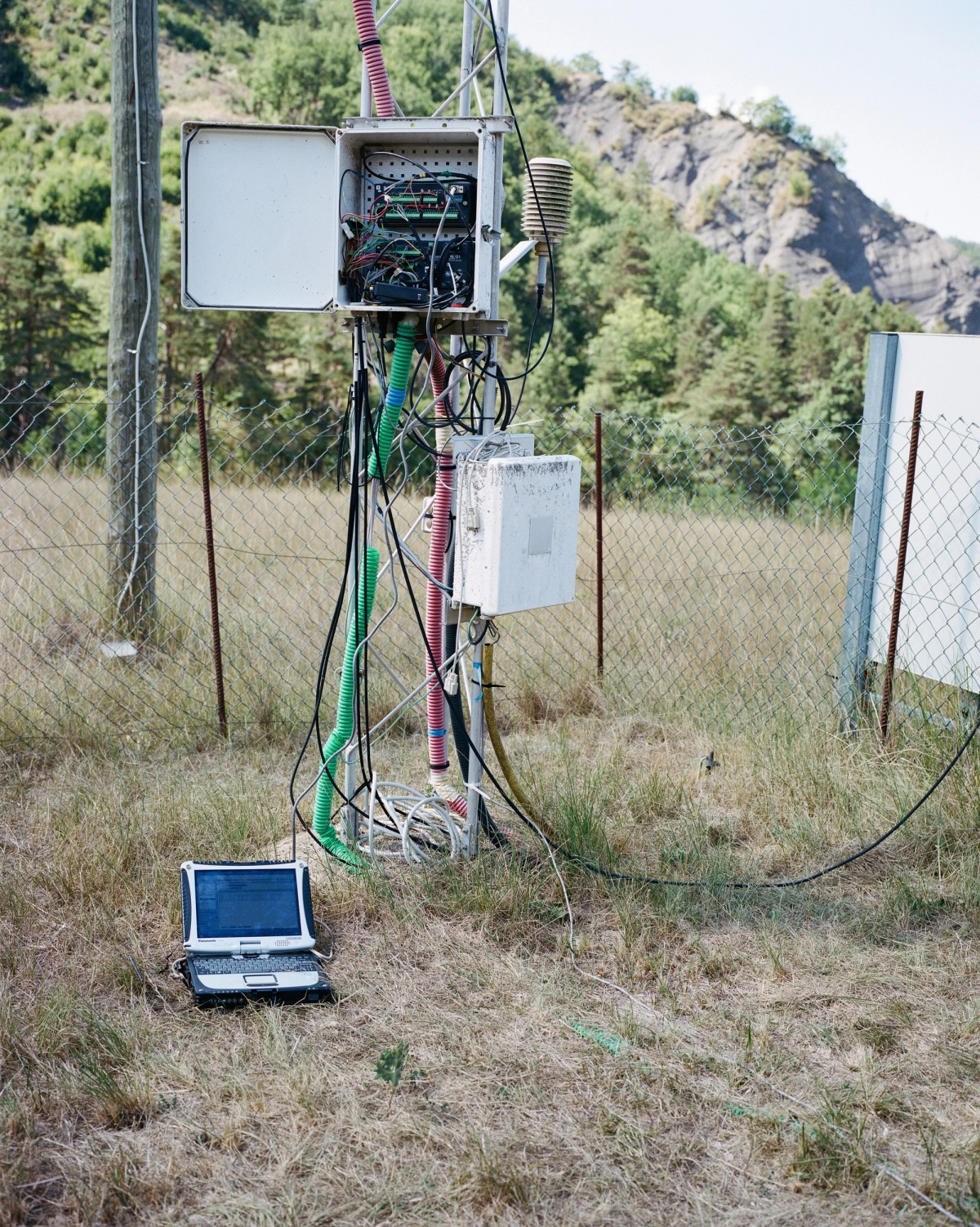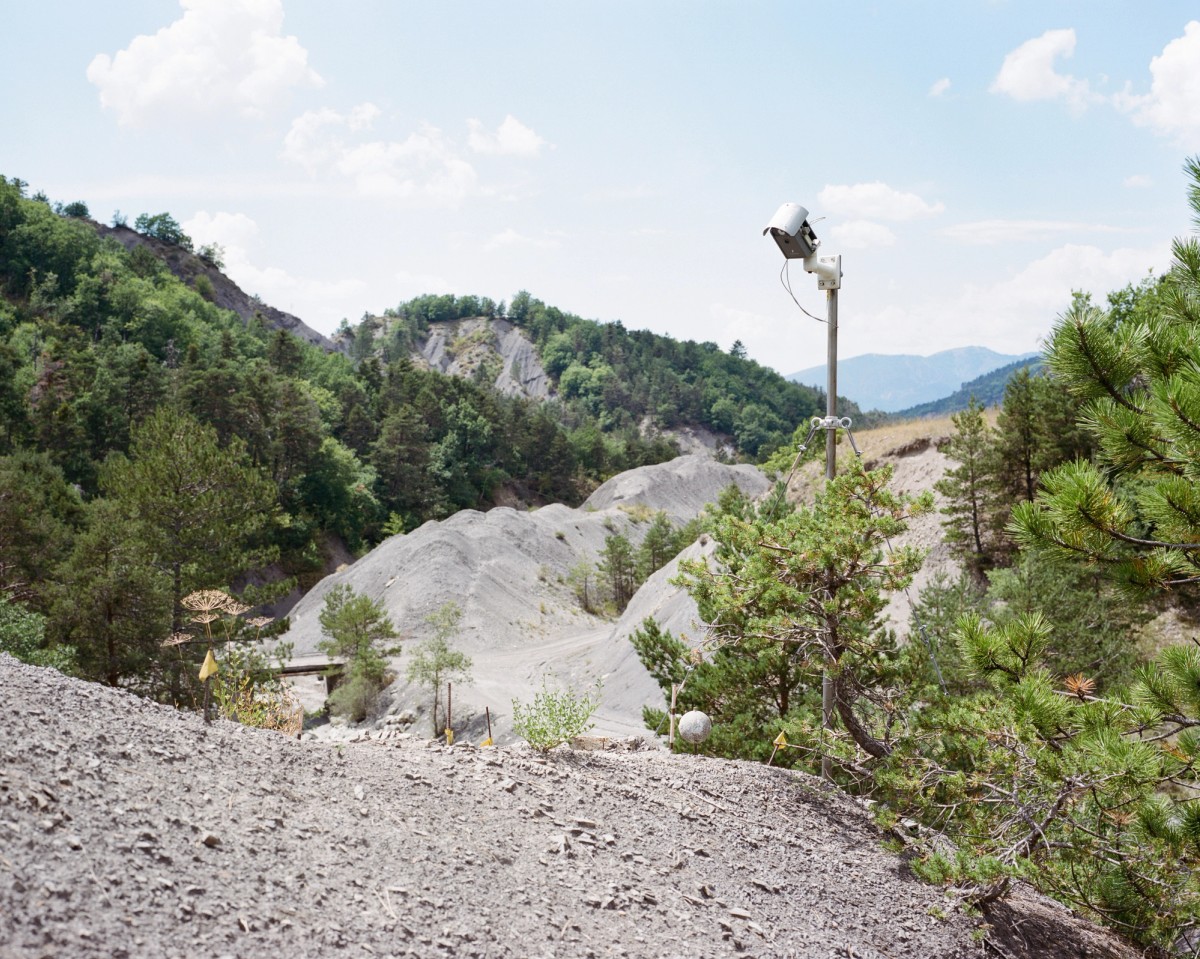
For an investigation named Sensing Earth, I followed the careful day-to-day practice of geographer Sébastien Klotz, who operates a Critical Zone Observatory in the French Alps. Located at a mountain watershed, the facility accumulates data on the erosion of soils within this very specific ecological situation. For French geochemist Jérôme Gaillardet, in La Terre Habitable (2023), the Critical Zone “refers to the superficial and very thin layer at the surface of our planet, which is located at the interface between the atmosphere and the earth’s crust”.
To understand the subtle relationship between climate and erosion through the geological, natural, and anthropogenic processes – characteristic of the Anthropocene – that occur within this particular location, a set of local, meticulous, and repetitive manipulations is executed. The on-site practice of Klotz relies on the dissemination of various low-tech sensors that, together with the careful annotation and collection of daily data, facilitate a detailed understanding of what ecology means in practice. This practice of reading rain gauges, measuring quantities of sediments within samples, and collecting data over a large time span is what renders comprehensible the subtle mechanisms that engender habitability in this specific territory.