MZ

To start navigating Metamorphic Zone, please rotate your device 90 degrees to navigate it horizontally.

Database

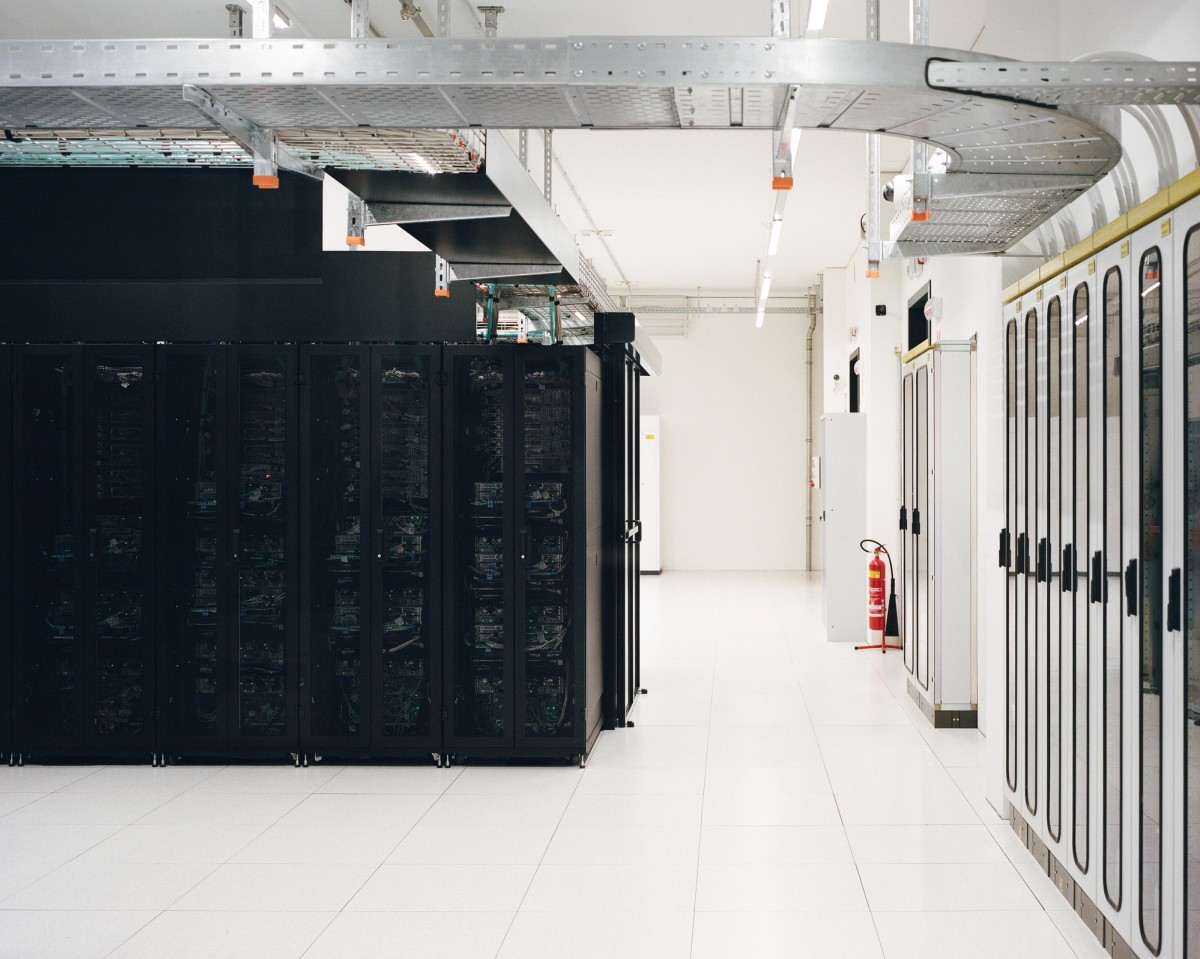
Data Center in Bissen, Luxembourg (for Sonic Investigations), Valentin Bansac, 2025.

When sending a request into a database, a signal is disseminated into the very fabric of the global digital infrastructure: optical fibers, servers, submarine cables are among the protagonists that permit the operation of this network.

-200’000’000 (formation of the Cantabrian geology) ; -14’010 (previous life) ; -14’000 (making of the artifact) ; -13’000 (collapse of the entrance and closure of the cave) ; 1’879 (excavations from María Sanz de Sautuola) ; 2’001 (creation of the Altamira Museum and Research Center) ; 2’024 (now according to me) ; 2’200 (sea level rise).

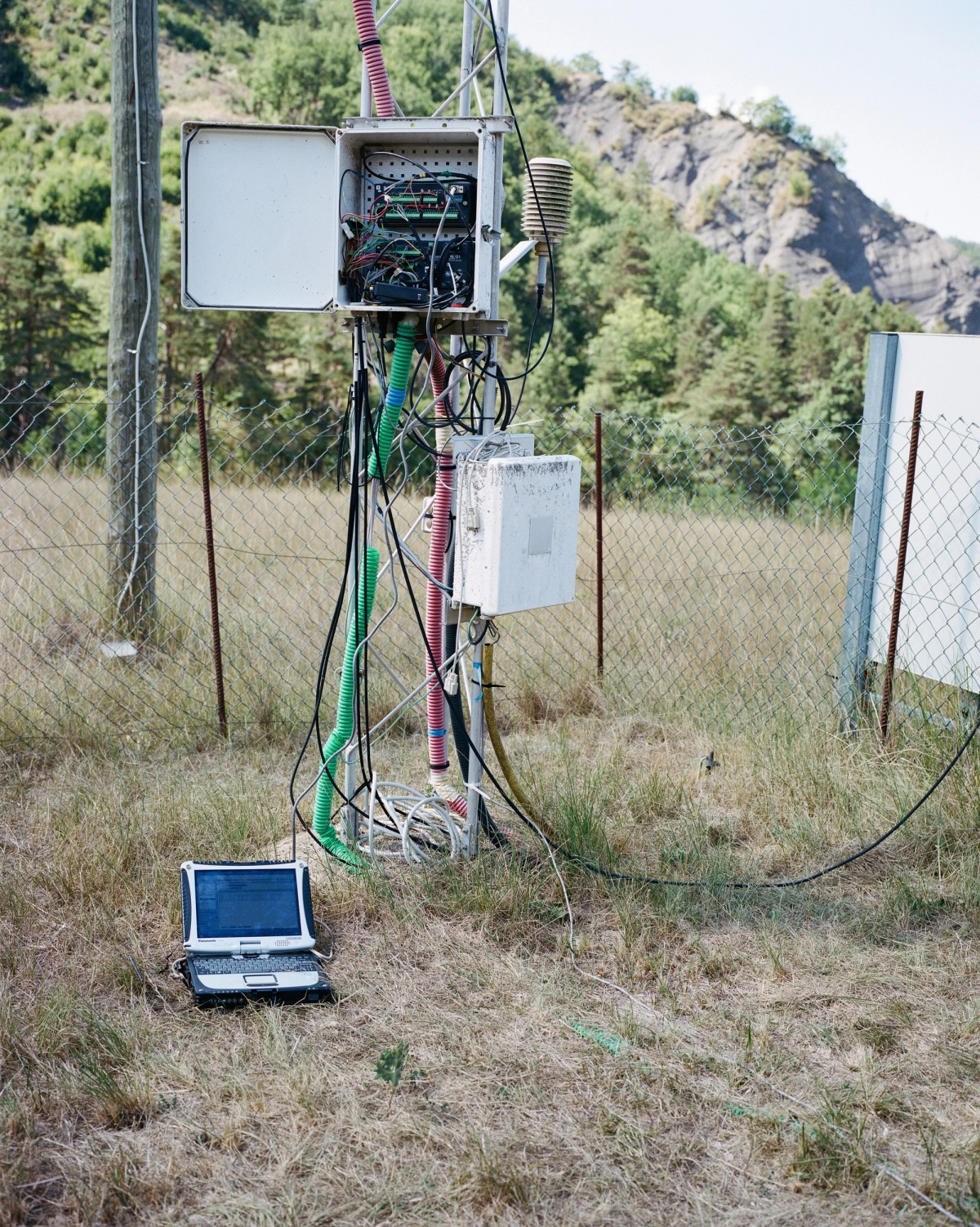
18°C 64°F 16/05/2019 20:09:29 – 20:09:44 0005 ; 9°C 48°F 13/05/2019 23:56:28 – 23:56:43 0012.

0.00m – 0.30m: slag ; 0.30m – 0.31m: geotextile ; 0.31m – 1.80m: brown and yellow clayey silt with some slag ; 1.80m – 1.90m: topsoil ; 1.90m – 2.30m: brown clayey silt ; 2.30m – 2.40m: gravel in a yellow clay matrix ; 2.40m – 3.20m: yellow and gray bedded clay ; 3.20m – 4.20m: yellow and gray bedded clay with numerous interlayers of crystallized gypsum ; 4.20m – 4.70m: weathered marl, layered gray and yellow with some interlayers of crystallized gypsum ; 4.70m – 5.00m: weathered gray laminated marl, cut into slices ; 5.00m – 8.70m: gray laminated marl, cut into slices ; 8.70m – 10.50m: compact gray marl, a few thin interbeds of carbonates (pyrite nodule at 9.90m).

49.64001, 6.17427 ; 49.66605, 6.25315 ; 49.48686, 6.36244 ; 49.53476, 5.90292 ; 49.91157, 5.92299 ; 49.95357, 6.17652 ; 49.89441, 5.98912 ; 49.75923, 6.44764 ; 49.49755, 6.05228 ; 49.64866, 5.95793 ; 49.78759, 6.08953 ; 49.69292, 6.32679.
×

Sensing, Sensors, Archives, Databases

In Accumulation: The Art, Architecture, and Media of Climate Change (e-flux Architecture, 2022), the editors argue that “The climate is not the weather. Weather can be experienced, but to understand climate, media is necessary.” This sentence encapsulates the universal attempts by human societies to monitor, write, comprehend, store, analyze, and predict the sensory information that characterizes the ever-evolving nature of the ecosystems we inhabit. However, what we sense and archive remains subject to how this information is collected and through which technologies it is measured; for Michael Hamilton and his colleagues (2007), “environmental knowledge is co-produced by sensing infrastructures”. In that regard, these practices and technologies turn ecological relationships into media – sensed, archived, and computed in turn.

Sensing exceeds what sensors do: it is the embodied, attentive, and often collective act of noticing what formal monitoring infrastructures are not designed to register. Sensors, by contrast, are the material mediators that translate this noticing into data; their dissemination and calibration constitute a practice as much as a technology. Archives transcend mere collections of elements, yet the explosion of digital content risks privileging the calculable over the transmission of sensitive knowledge that defies quantification. Databases are the infrastructure through which queries travel; far from neutral containers, they actively construct what we consider facts. Together, they trace our relationship with what we consider the environment – through present, past, and therefore future ecological entanglements between humans and non-humans, through practice and technology, via simulation and storytelling.

×