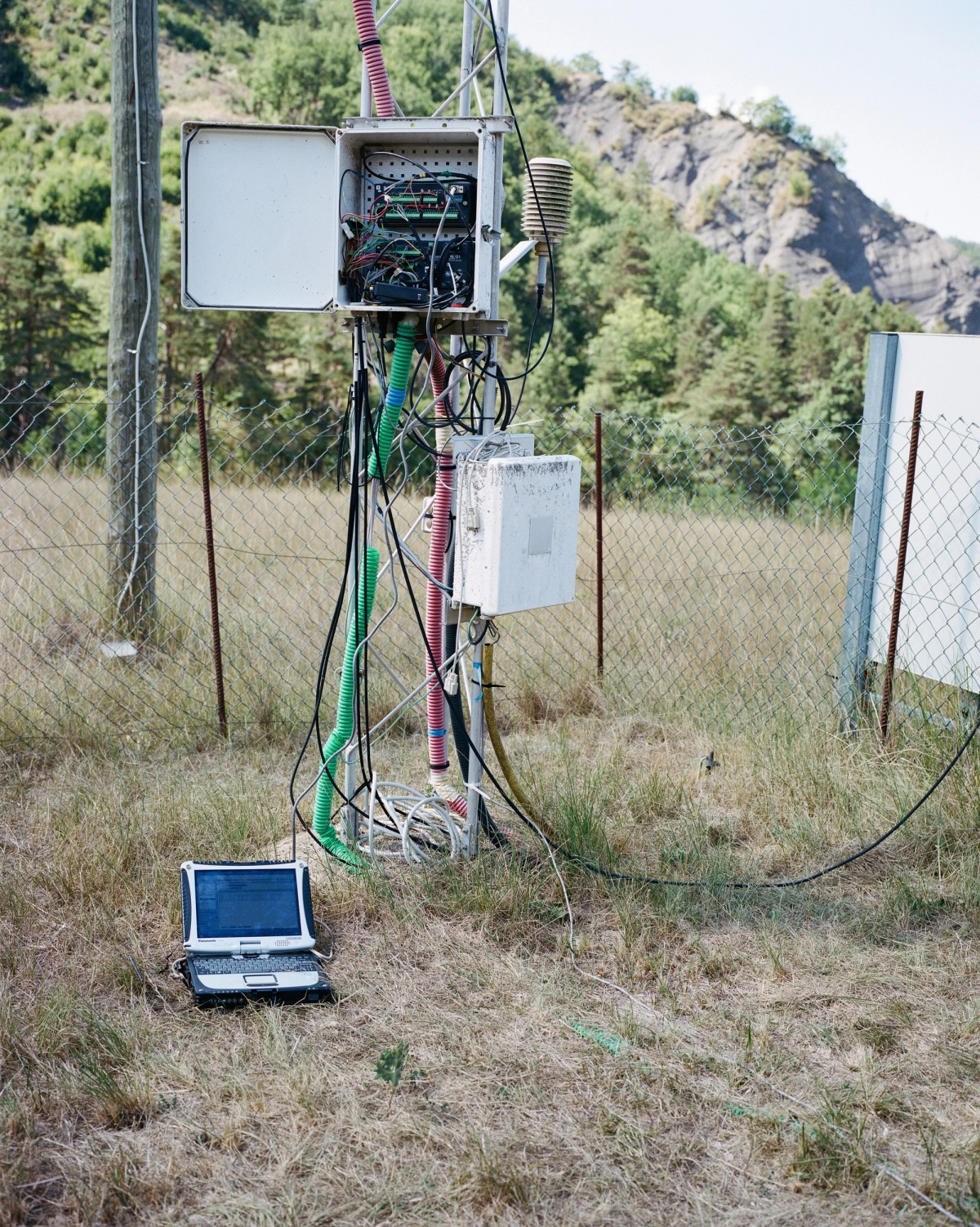
In Accumulation: The Art, Architecture, and Media of Climate Change (e-flux Architecture, 2022), the editors argue that “The climate is not the weather. Weather can be experienced, but to understand climate, media is necessary.” This sentence encapsulates the universal attempts by human societies to monitor, write, comprehend, store, analyze, and predict the sensory information that characterizes the ever-evolving nature of the ecosystems we inhabit. However, what we sense and archive remains subject to how this information is collected and through which technologies it is measured; for Michael Hamilton and his colleagues (2007), “environmental knowledge is co-produced by sensing infrastructures”. In that regard, these practices and technologies turn ecological relationships into media – sensed, archived, and computed in turn.
Sensing exceeds what sensors do: it is the embodied, attentive, and often collective act of noticing what formal monitoring infrastructures are not designed to register. Sensors, by contrast, are the material mediators that translate this noticing into data; their dissemination and calibration constitute a practice as much as a technology. Archives transcend mere collections of elements, yet the explosion of digital content risks privileging the calculable over the transmission of sensitive knowledge that defies quantification. Databases are the infrastructure through which queries travel; far from neutral containers, they actively construct what we consider facts. Together, they trace our relationship with what we consider the environment – through present, past, and therefore future ecological entanglements between humans and non-humans, through practice and technology, via simulation and storytelling.